

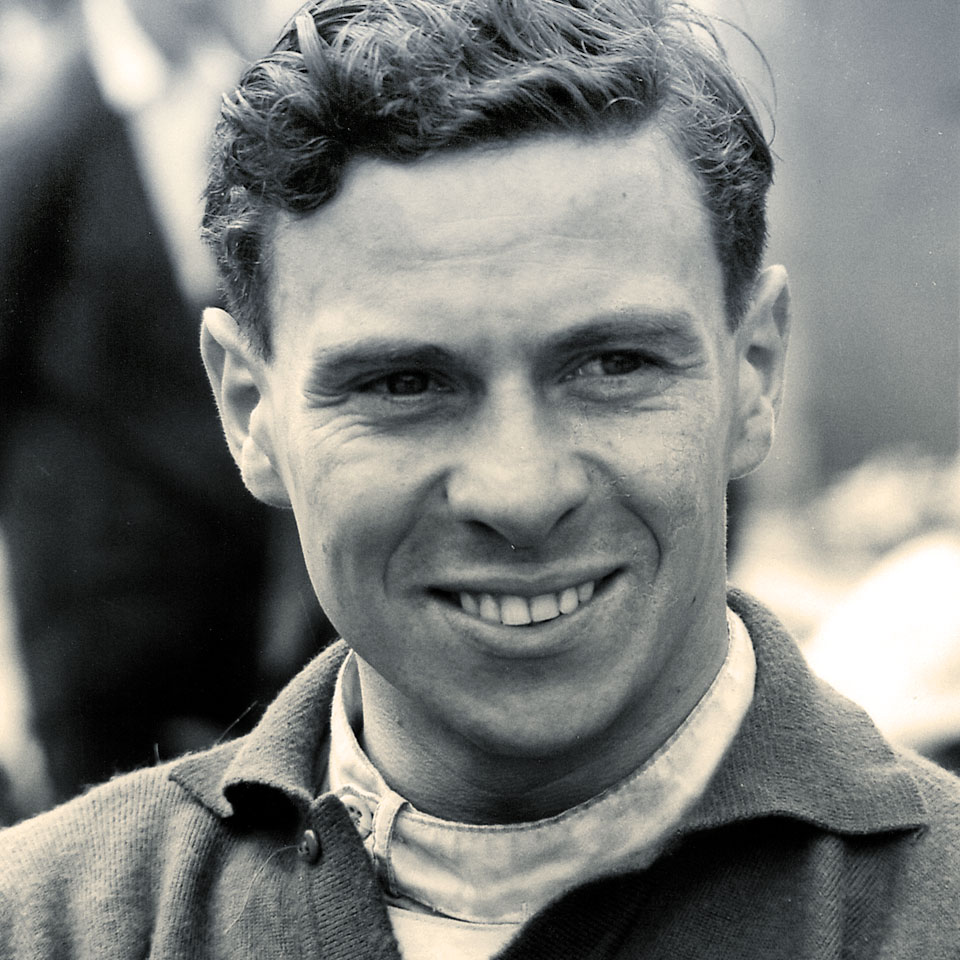


Jim Clark Biography 4th March 1936 – 7th April 1968
The two-time world champion was killed in an accident on 7th April 1968 at the Hockenheimring.
Jim Clark and Colin Chapman was the most fascinating and successful duo in motorsport history.
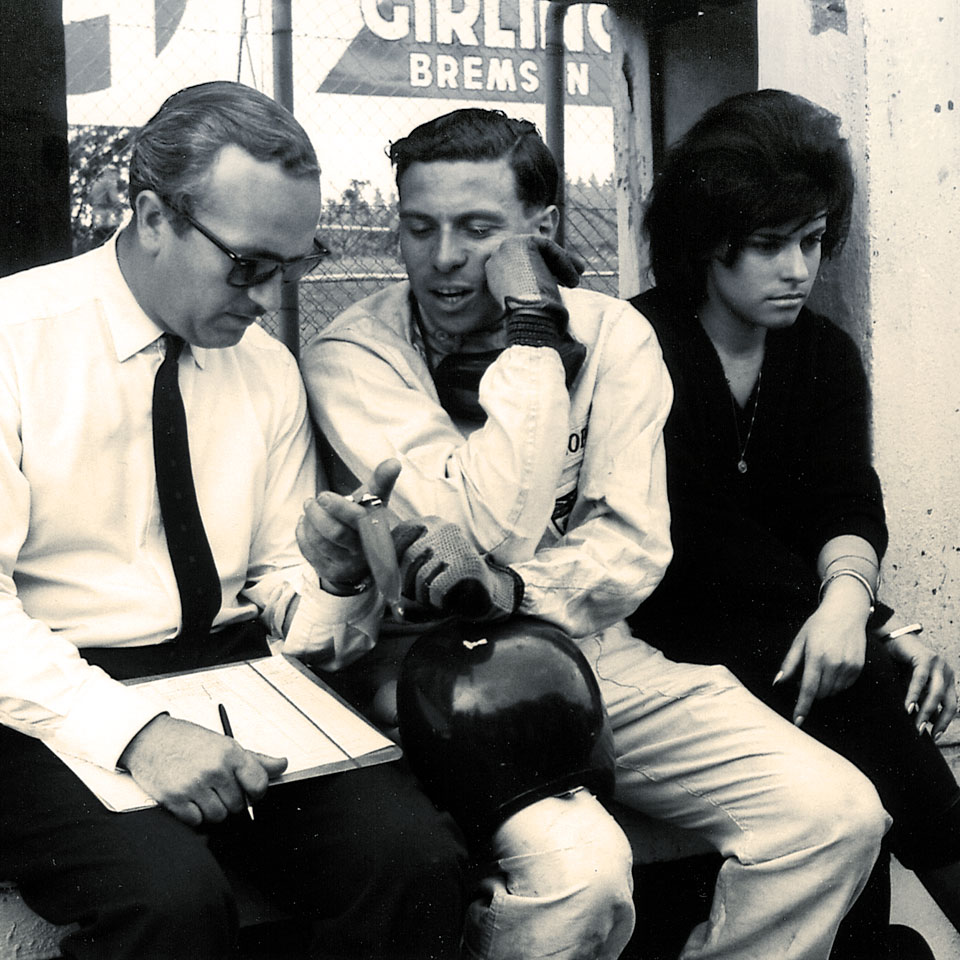
With Chapman as the genius on the drawing board and Clark as the virtuoso on the steering wheel, the two complemented each other in unique ways. Anything Colin Chapman developed as an engineer was perfectly translated in speed by Jim Clark. Through the years, a close friendship was formed which only cemented their work relationship. Together, they conquered the world of motorsport.
About Jim Clark
James “Jim” Clark was born on 4th March 1936 in Kilmany, Five in Scotland. At the age of 18 and against his parents‘ wishes, he came in contact with motorsport. Regional rallyes, agility competitions and sprints were on his agenda before he partook in his first circuit race on a DKW 3/6 which belonged to his friend Ian Scott Watson.
In 1958 the Broder Reivers team provided Jim Clark with his first real racing car, a Jaguar D Type. National races in Mallory Park and Silverstone as well as his first international race in Spa (Belgium) followed. At a Lotus test day in Brands Hatch November of 1959, Jim Clark and Colin Chapman met for the very first time. Clark was able to test a Lotus Formula 1I car. So Jim Clark was not thrust in the spotlight overnight. Before he was driving his Formula 1 Lotus in 1960, he had participated in 54 events in 123 competitions. In 1960 the success story Clark/Chapman began. Clark‘s drive for the Lotus team in a Lotus 18 Formula Junior was so successful that Colin Chapman made it possible for him to start in the Formula 1 in the very same year.
The first time in front of a German audience
On 4 June 1960 at the World Cup in Zandvoort (The Netherlands) Jim Clark‘s Formula 1 career started with a breakdown. About a month later, he started in Germany for the very first time in front of an audience of 200,000. At the Solitude race in Suttgart he had already won the Formula Junior race and was now staring in the Formula 1l race next to popular drivers such as World Champion Jack Brabham, Phil Hill, Jo Bonnier and Lord Berghe von Trips. But none of these established drivers was first after the first few rounds. It was then-unknown Jim Clark who drove one record-breaking round after another. Even though Jim Clark had to drop out because of a techincal malfunction, Stuttgart witnessed the beginning of a new era. From now on, Clark was part of the regulars in Formula 1. In Monza, Jim Clark had to experience how close success and tragedy can be in motorsport first-hand. He collided with Lord Berghe von Trips in the first phase of the race. Von Trips, who was the first German on his way to be World Champion, was killed in the accident.
On the prowl for the World Championship
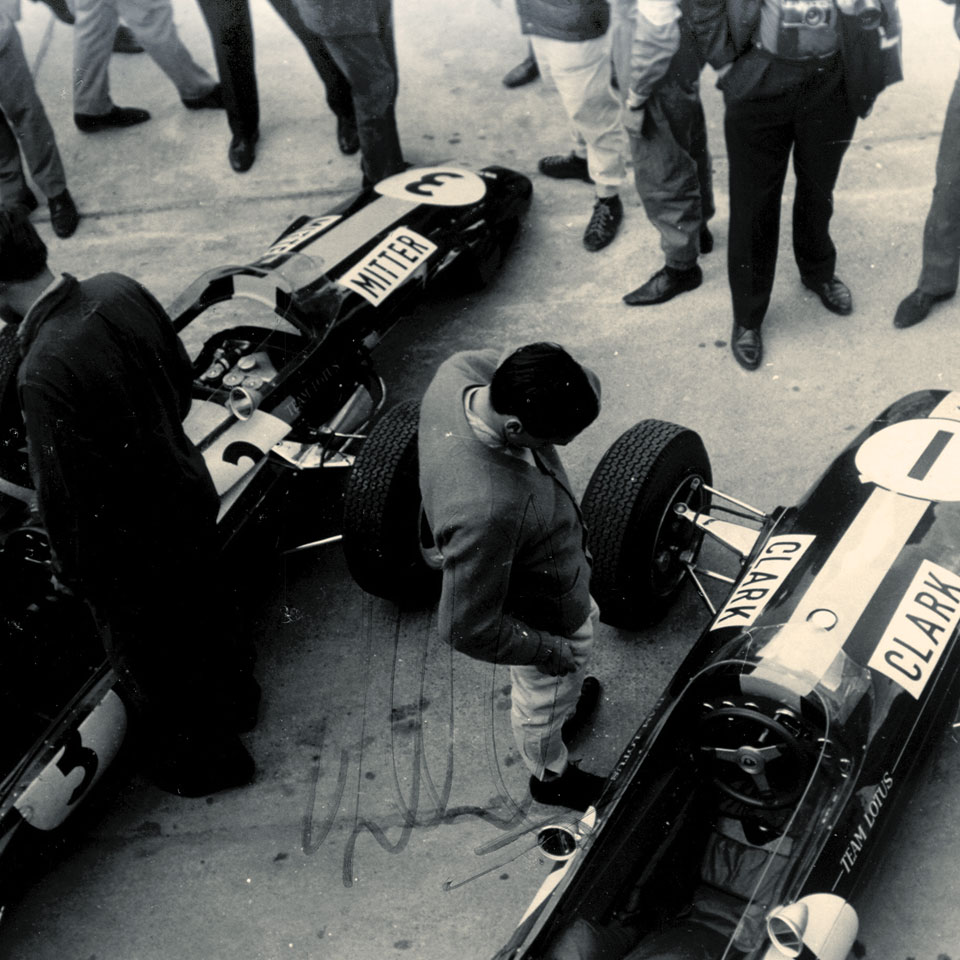
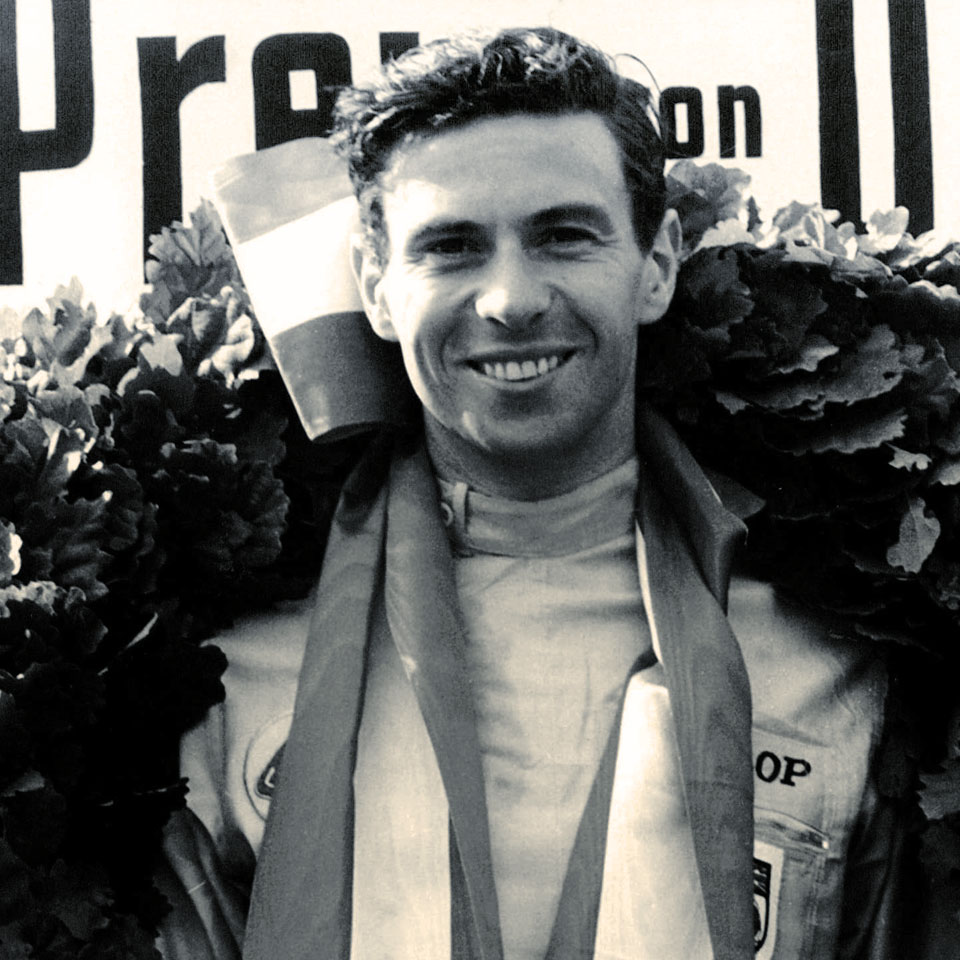
During 1962, Jim Clark became a serious contender for the world championship. With the Lotus 25, Chapman used a monocoque chassis for the first time which in combination with Clark on the steering wheel was without competition. In Spa, Belgium, Clark won his first ever Formula 1 Grand Prix, two more wins followed. Despite that he lost the title in 1962 in the last race to BRM‘s Graham Hill. In 1963 Chapman and Clark were able to reap the fruit of their labour. Jim Clark won seven out of ten races in his Lotus 25 and became world champion. In 1964, the team‘s focus dwindled because Lotus relied too heavily on Jim Clark‘s outstanding skills. The car‘s reliability suffered because of this and Clark lost the title in the last race to Ferrari‘s John Surtees. In 1965 however, Team Lotus managed to surpass the successful 1963 season. Dropping out of the Grand Prix in Monaco paid off with a win in the Indianapolis 500-Mile Race. For the first time since 1916 a European turned into the “Victory Lane” again. In the third to last race on 1 August at the Norisring, the “Flying Scot” secured his second championship title in his Lotus 33. Wins in the Formula 1I championship of England and France as well as his legendary success in the Lotus Cortina rounded off the season.
Missed title
1966 was an interim year. Jim Clark was not really competitive in a Lotus 43 with a BRM H16 cylinder motor. However he still managed to win the USA Grand Prix in Watkins Glen. In 1967 global corporation Ford entered the Formula 1 with Lotus. Jim Clark presented the combination of Lotus 49 and Ford Cosworth V8 with a triumphant win in Zandvoort. Jim Clark and his new teammate Graham Hill dominated the rest of the season. Clark went on to win three more races, but lost the championship title to Dennis Hulme and his reliable Brabham.
Most successful driver of all times
With his 25th Grand Prix win in South Africa, Clark started the new season perfectly on 1 January 1968. With one more win than Fangion, he became the most successful driver of all times. The win also meant the end of an era because it was the last GP win of a Lotus with the traditional green and yellow colors. People started to say that Clark‘s superiority was so overwhelming that even the most interesting races were turning into a monotone play. I think that continuing success has nothing to do with monotony but rather is the outcome of a magnificent and outstanding effort.
In February, Clark won the Tasman Series in Australia and New Zealand and the Lotus team presented themselves as the Gold Leaf Team Lotus in the colors red, white and gold for the first time. At the end of March there was an international Formula 1I race in Spain, followed by the first ever run for the European trophy for Formula 1I drivers at Hockenheimring. Despite problems with his Lotus 48 during training, Jim Clark followed TV broadcaster ZDF‘s invitation to their popular show “Das Aktuelle Sportstudio”. His TV appearance next to Kurt Ahrens remains unforgotten. On the following morning, 7 April 1968, the first run for the European trophy at Hockenheimring started. The rest is history.
Kurt Ahrens said at the Jim Clark Revival in 2007:
A friend lost, but never forgotten!